
 March 9 2026
You can agree that the average online player should never need a rulebook to get their own money back. Yet, in practice, glitches and misguided policies on some platforms can create a scenario where players are effectively denied access to funds they deposit. Such experiences are actually not new in the gambling industry, underscoring why regulators are really working to protect users.
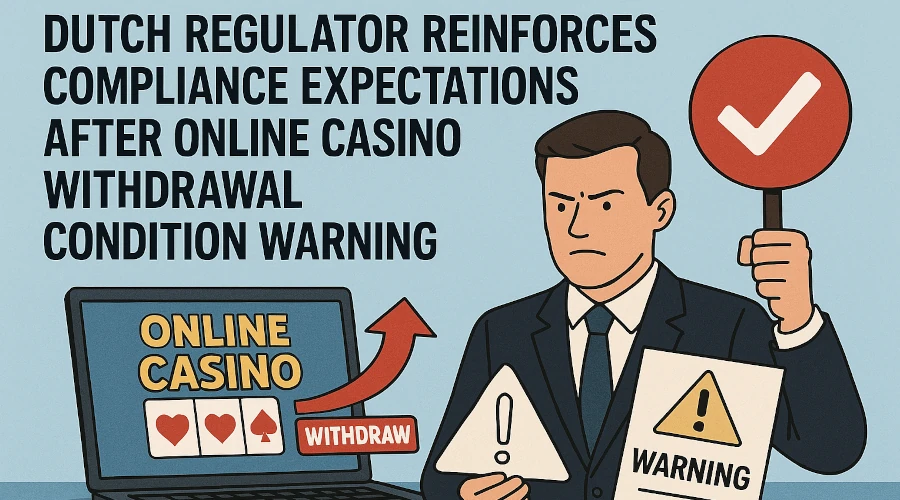
And in the Netherlands, things haven’t been any different. The country’s gambling regulator has made it clear that players must be able to access their funds without hidden conditions. That soundbite might seem like consumer common sense, but what has unfolded over the past year in the Dutch regulated gaming market tells a more compelling story about how regulators are sharpening compliance expectations in more practical ways.
Remember, the rise of online platforms like Beterebonus has made it possible for players to conveniently engage in gambling. So long as someone has a reliable internet and a smartphone, they can spot a reliable gambling platform and participate in their favorite games of chance, all with a tap of a button.
But this convenience can come with its own set of risks, especially when operators fail to align their withdrawal policies with regulatory standards designed to protect player funds. That’s why the Dutch gambling watchdog, Kansspelautoriteit (KSA), has gone ahead to reinforce compliance expectations.
The warning was triggered by a player’s complaint that they couldn’t withdraw funds from ZEbet. Mark you: under KSA rules, operators may restrict withdrawals only in limited cases, such as those linked to anti-money laundering (AML) obligations or fraud. However, in this case, the player had not even claimed a bonus.
Upon receiving the complaint, the Netherlands regulator initiated an investigation and requested clarification from the operator. ZEbet responded by claiming that a technical error in its system had mistakenly applied wagering conditions to the player’s balance. It resolved the issue the same day and released the player’s funds with no additional requirements.
But the quick fix did not mean the matter was simply brushed aside. The KSA made it clear that even technical errors can have serious implications when they interfere with a player’s right to access their own money. As such, it emphasized that operators are still expected to maintain systems that function properly at all times.
Interestingly, ZEbet’s warning came at a time when its parent company, ZEturf, was also facing regulatory scrutiny. Just a day before ZEbet’s warning, KSA reprimanded ZEturf’s betting arm, ZEbetting, for offering bets to illegal tennis events. Under Dutch gambling regulations, bets where a player can win or lose a specific set in a tennis match aren’t legalized, and operators may not include them in their offerings under any circumstances.
Almost simultaneously, KSA decided to expand its investigations to assess whether other operators were compliant. This broader audit led the regulator to Starcasino, which was found to have contradictory language in its terms regarding wagering and payout conditions. Even though the in-depth details of those discrepancies were not revealed, the KSA firmly reminded operators that withdrawals must never be conditional on arbitrary playthrough demands, except in cases where a player has accepted a bonus.
Starcasino responded promptly and amended its terms to ensure total compliance. Thanks to the operators’ cooperation, they were able to avoid financial penalties. The absence of systemic harm to players also provided reasonable grounds for KSA to issue only formal warnings rather than fines. However, KSA maintains that any future violations, particularly those involving repeated non-compliance, could result in serious consequences, including substantial fines.
Based on these warnings, it’s clear that compliance is no longer an option. Take, for instance, KSA’s recent move to fine ComeOn. After reviewing approximately 10 player files involving young adults, KSA found that the operator had violated duty-of-care requirements. As a result, ComeOn was fined €750,000 for failing to adequately protect users from excessive engagement.
According to Michel Groothuizen, Chairman at KSA, “On something as fundamental as the duty of care, operators cannot afford to make mistakes, especially when it concerns vulnerable groups such as young adults.”
ComeOn’s fine came after KSA had just levied a €500,000 against operator LeoVegas for violating national player protection protocols. Given the importance of duty of care in player protection, KSA expects operators to respond appropriately to immoderate play. But LeoVegas was found wanting in several key areas, including timely intervention in risky player behavior and proper monitoring of high-loss accounts.
As the Dutch market becomes more structured, operators seeking long-term survival must now be more cautious. Of course, that could feel like pressure, but it can also be an opportunity to build differentiation through reliability. And this could mean:
You don’t want players to perceive your brand negatively simply because it was highlighted as non-compliant. After all, in today’s regulated market, trust is everything and can actually be the reason your online casino tops the list of preferred choices for Dutch players. With KSA expected to continue rigorous monitoring, operators who adhere to its standards will not only avoid penalties but also gain a reputational edge.



Malta-License (EU)


Curacao-License
Curacao-License

Curacao-License

Curacao-License

Curacao-License


Curacao-License
 There is a No Deposit Bonus available: $7 Free Cash

Curacao-License
There is a No Deposit Bonus available:
100 Free Spins (Wager-free)
Curacao-License
There is a No Deposit Bonus available: 15 Free Spins



Curacao-License